Product case study · Working web app
Résumé Forge
A résumé and application workspace built around one reusable source of truth—and controls designed to keep AI-assisted tailoring honest.
01 · The problem
Tailoring should not create a new truth every time.
Typical résumé workflows produce near-duplicate files and make it easy for generated language to drift beyond the underlying experience. The product starts from a reusable accomplishment bank, then treats every tailored document as a controlled selection from that record.
02 · Decisions I owned
- Defined the core product model: one reusable accomplishment bank instead of a folder of drifting résumé copies.
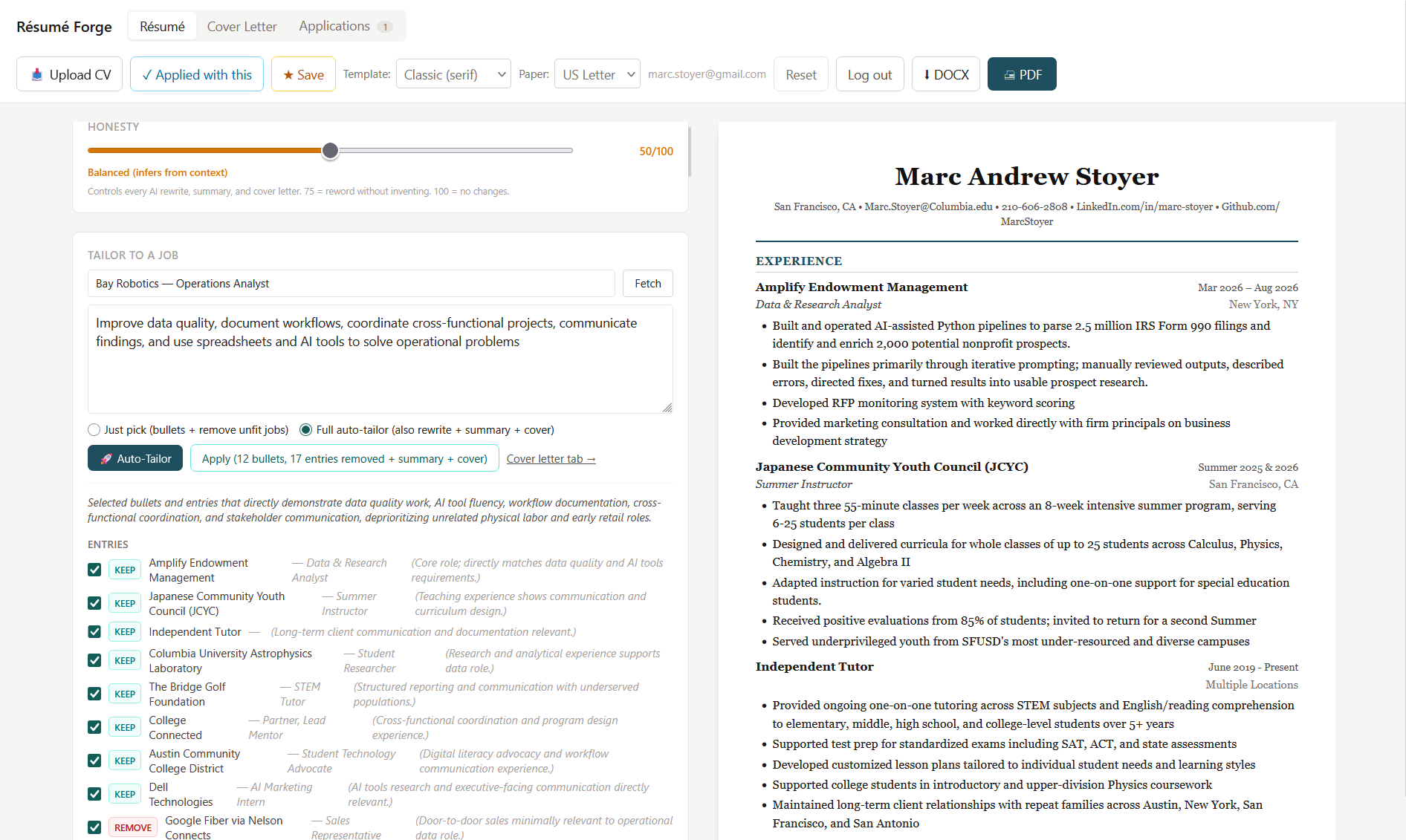
- Specified honesty controls, including adjustable conservatism, editable recommendations, per-bullet decisions, original-text recovery, and undo.
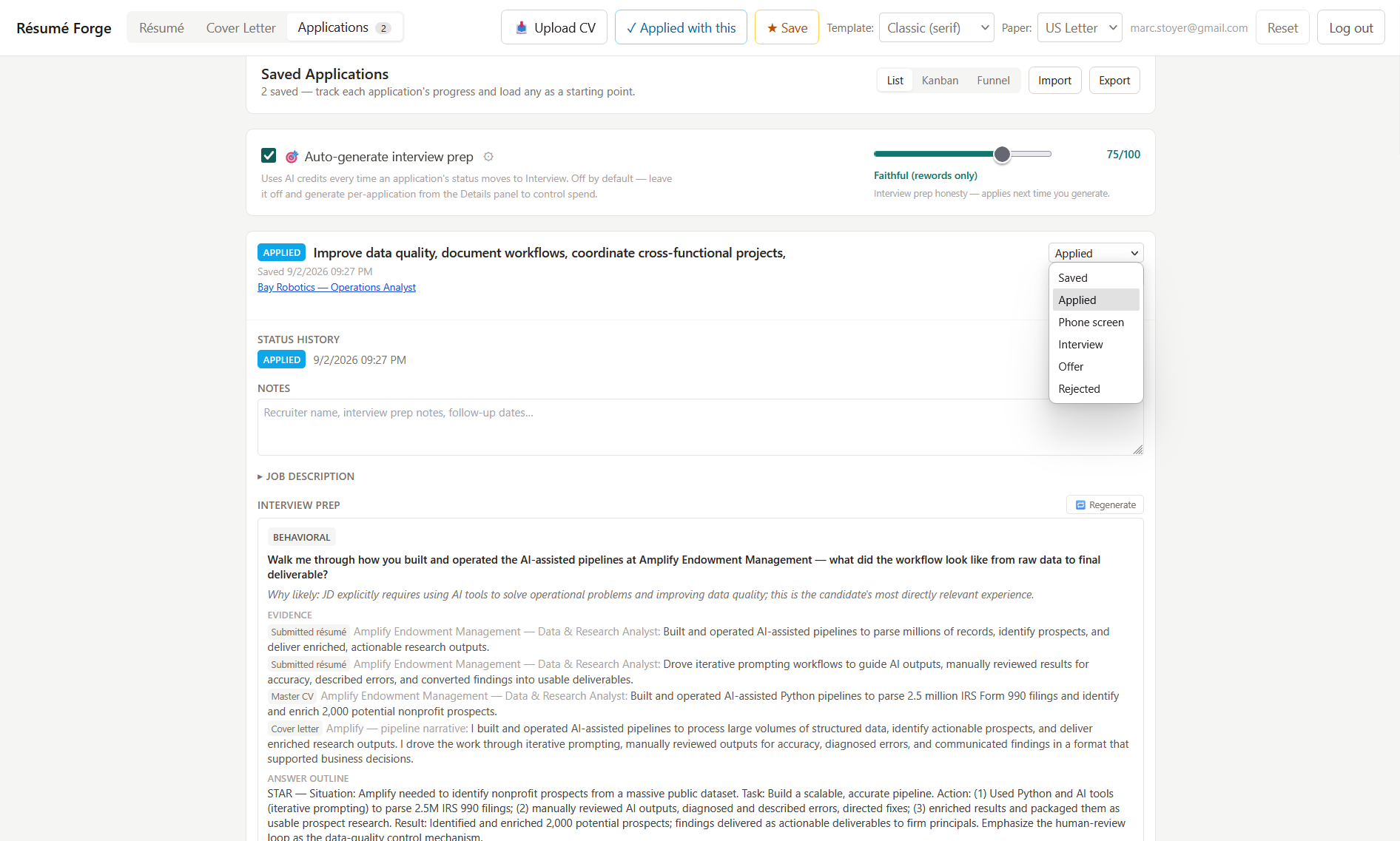
- Designed the application-tracking workflow and decided which features shipped across successive versions.
- Specified evidence-grounded interview preparation, including when it runs, how deep it goes, which evidence it uses, and how users recover from a stalled request.
- Tested releases, found résumé-voice and parsing failures, and required corrections before treating a version as ready.
03 · What exists
Imports résumés from PDF, DOCX, images, and text.
Supports structured editing, section reordering, and job-description tailoring.
Generates editable cover letters and stores application materials by job.
Generates likely interview questions and evidence-grounded answer outlines from each saved application.
Exports PDF and DOCX files and supports private, account-based persistence.
04 · Product evidence
05 · What I learned
Product ownership is not the same as code authorship. The useful skill here was turning a fuzzy problem into explicit behavior, testing whether the implementation matched it, and refusing output that sounded polished but was not true.
06 · Current edge
The next phase is deeper technical ownership: tracing the architecture end to end, documenting the main data flows, and re-testing sign-in, save, tailoring, and export before broader promotion.
Next case study
Process Notebook →